EV CHARGING

Your Guide to Home and Business EV Charger Installation in Wagga Wagga
July 2026 |


EV Charging |
5 min read
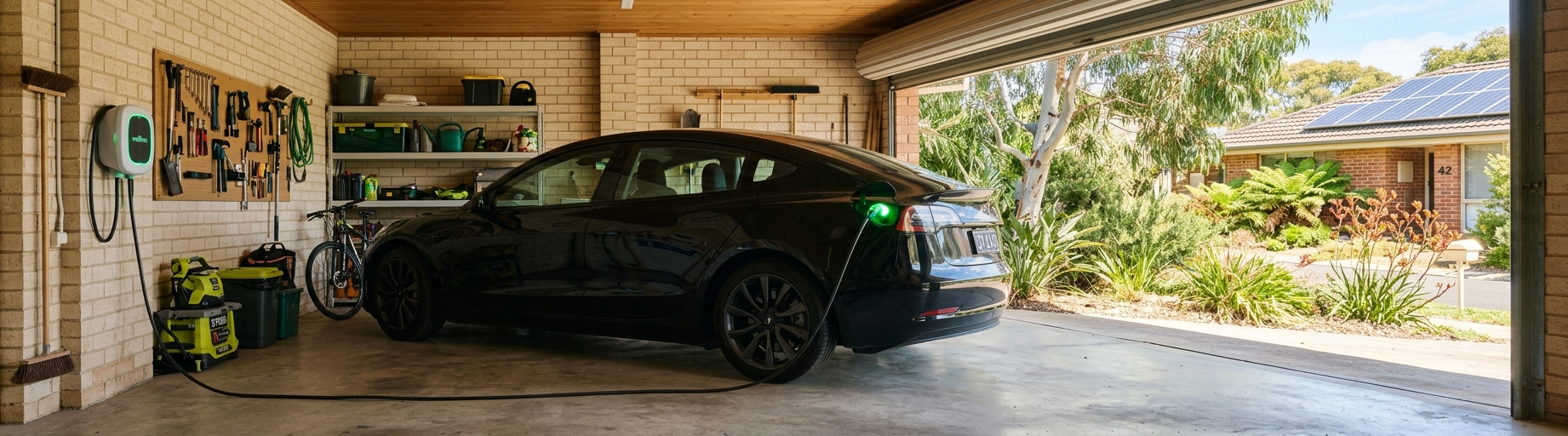
Buying an electric vehicle often raises a new question: how will you charge it at home or work?
Josh Currie Electrical provides EV charger installation across Wagga Wagga and the Riverina for homes, businesses and rural properties.
Whether your charger came with the vehicle or you need advice on a suitable charging setup, Josh can assess your property, electrical supply and proposed charger location before installation.
QUICK TAKEAWAYS

⚡️Dedicated EV chargers are faster and safer than standard power points. A professionally installed EV charger can significantly reduce charging times and provide enhanced safety features.
⚡️Business EV charging can benefit both staff and customers. Workplace charging can enhance customer experience, support fleet vehicles and help future-proof your business.
⚡️Home EV charging offers convenience and can integrate with solar. Many homeowners choose to charge overnight or use excess solar energy to reduce running costs.
⚡️Always use a licensed electrician for EV charger installation. Professional installation ensures your charger is safe, compliant and correctly matched to your property's electrical capacity.
Already have an EV charger?
Many EV buyers receive a charger with their vehicle or purchase one separately before contacting an electrician.
If you already have a charger, Josh can assess whether it is suitable for your property and complete the electrical installation.
Before installation, Josh will consider:
the charger make and model
your vehicle
switchboard capacity
available electrical supply
single-phase or three-phase supply
proposed charger location
cable route and distance
whether additional electrical work is required
If upgrades or additional work are needed, Josh will explain what is required before the installation proceeds.
What Josh checks before installation
A site assessment helps confirm that the proposed installation is suitable before work begins.
Switchboard capacity: Whether the existing switchboard and electrical protection are suitable for the proposed charger.
Electrical supply: The available supply and whether the property is single-phase or three-phase.
Charger location: Where the charger will be mounted in relation to where the vehicle is normally parked.
Cable route: The most practical route between the switchboard and charger location.
Existing electrical condition: Whether any upgrades or rectification work may be required before the charger can be installed.
This helps identify potential issues before installation and reduces the risk of unexpected additional work.
Why professional EV charger installation matters
An EV charger can place a significant additional load on a property’s electrical system.
Professional installation helps ensure the charger, dedicated circuit, protection and electrical supply are suitable for the application.
Josh Currie Electrical completes EV charger installations in accordance with applicable Australian Standards and NSW electrical requirements, with testing and compliance documentation completed where required.
Where applicable, a Certificate of Compliance for Electrical Work (CCEW) is completed following the electrical work.
Smart EV charging features
Some EV chargers offer additional features that can provide greater control over when and how your vehicle charges.
Depending on the charger, features may include:
Wi-Fi or app control
scheduled charging
energy usage monitoring
load management
remote charging control
solar integration
Features vary between charger models, vehicles and properties, so it is worth checking what the selected unit actually supports before installation.
Can EV owners use the 3 hours of free electricity?
Eligible NSW households can access the Australian Government’s Solar Sharer Offer, which provides 3 hours of free electricity from 11am–2pm each day.
The offer is available to eligible households in NSW with a smart meter, including renters and homeowners. Rooftop solar is not required.
Eligible households can use up to 24 kWh of free electricity during the daily free-power window. EV charging is specifically identified by the Australian Government as one way households may use the offer. Energy.gov.au
For EV owners, a charger with scheduling capability may make it easier to plan charging during the free-power period.
Important: the Solar Sharer Offer is optional. Electricity used outside the free period and daily supply charges still apply, so customers should speak with their electricity retailer and compare the full tariff before deciding whether the offer suits their household. Energy.gov.au
Rural properties can present different installation challenges, including longer cable routes, sheds, workshops and electrical supplies located away from the main residence.
Josh services Wagga Wagga and surrounding Riverina communities and can assess the most practical charger location and electrical route for rural properties.
Rural property EV charging
Why Professional Installation Matters
EV chargers draw significantly more power than many household appliances.
Professional installation ensures:
Safe operation
Compliance with Australian Standards
Appropriate circuit protection
Correct charger configuration
Reliable long-term performance
Attempting DIY installation or using unsuitable adapters and extension leads can create significant safety risks. EV charging equipment should always be installed by a licensed electrician.
What actual customers say:

Josh was punctual, thorough, honest, reliable and nothing was a trouble to him.
Marie — Wagga Wagga
Frequently Asked Questions
-
No. Many EVs can be charged from a standard power point, however a dedicated EV charger is generally faster, safer and more convenient for everyday use.
-
Most home chargers installed in Australia are Level 2 chargers and can typically add between 30 and 80 kilometres of driving range per hour, depending on the charger and vehicle.
-
Many homes can accommodate an EV charger, however some properties may require switchboard upgrades or additional protection devices. A site inspection will determine what is required.
-
Yes. Many modern EV chargers can integrate with rooftop solar systems, allowing you to charge your vehicle using excess solar energy when available.
-
Yes. Josh can assess the charger, your electrical supply, switchboard and proposed installation location to determine whether the setup is suitable.
-
Yes. EV chargers must be installed by a licensed electrician and comply with Australian electrical standards to ensure safe and compliant operation.https://cet.asn.au/news-insights/can-normal-electricians-install-ev-chargers-a-comprehensive-guide?utm_source=chatgpt.com
⚡️Thinking about installing an EV charger at your home or business?
Whether your charger came with your vehicle or you need help choosing a suitable option, Josh Currie Electrical can assess your property and complete the installation.